
Restora Austin Rhinoplasty
The nose is the first facial feature other people notice, not only because it’s in the middle of the face but also because it is constantly exposed. Suppose your nose is out of balance or has an abnormality. In that case, you can’t hide it with makeup, and it can detract from your other features, calling too much attention to itself. When your nose is in harmony with the rest of your face, this symmetry actually enhances your overall look. Because people have different facial features, there is no ideal nose structure that will fit every face.
In the hands of Dr. Dustin Reid, a member of the prestigious Rhinoplasty Society, rhinoplasty or nose surgery is as much an art as a science. The goal is a natural-appearing result that brings balance to your facial features. Not the operated-on, sloping, pinch-tipped nose of the past or a celebrity’s nose that might not look great on you. Your ethnic background and sex must also be considered. The goal is for it to be your nose – just better.
Dr. Reid has a particular interest in noses. He performs all of the rhinoplasty surgeries at Restora Austin, focusing his practice to have honed his skills over years. The precision of the procedure requires a keen eye for detail that leverages his meticulous nature and approach to surgery. He has a deep understanding of how to reshape the nose to preserve facial harmony and symmetry – for both men and women. Every patient is different, and Dr. Reid takes care to evaluate the characteristics of your nose that are uniquely yours.
One of the tools that Dr. Reid uses is photography with facial-morphing software. You will be able to review the changes to your nose at your initial consultation. This allows you to be more involved with the process and provide input on your personal preferences and what you feel is attractive. It is an excellent communication tool, ensuring that you and Dr. Reid have the same picture in mind.
To learn more about rhinoplasty in Austin, contact Restora Austin today to schedule a consultation or call 512-371-8817.
Quick Links
- What Are Nose Aesthetics?
- Want To See Real Rhinoplasty Results?
- What Are The Differences Between Rhinoplasty Approaches?
- How Much Does Rhinoplasty Cost?
- How Do You Choose The Best Rhinoplasty Surgeon?
- Why Choose Restora Austin For Rhinoplasty?
- What Can You Expect During Rhinoplasty Recovery?
- How long do rhinoplasty results last?
- Rhinoplasty FAQs
What are Nose Aesthetics?
Excellent nose aesthetics have been clearly described through the years. However, people dislike their noses for all sorts of reasons. It all comes back to facial harmony. How well do all of the features of the face complement each other? When someone’s nose “fits” their face, we don’t necessarily notice it. Instead, we focus on their more expressive features. So, if you dislike your nose, you don’t want it to get in the way of your overall attractiveness. The bottom line is that after rhinoplasty at Restora Austin, you will look like you, but without the distraction of a nose that doesn’t quite do you justice.
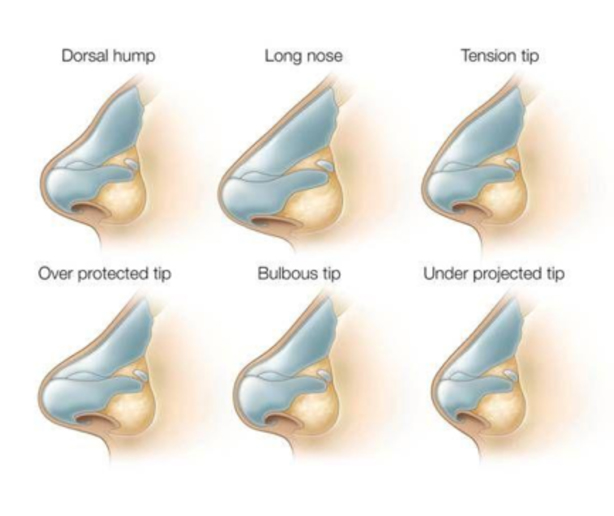
Below are the more specific concerns that Dr. Reid hears when people come to him for a rhinoplasty consultation.
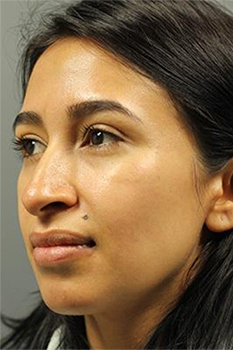
WANT TO SEE Rhinoplasty RESULTS?
Take a look at our Rhinoplasty photo gallery to see real patient results. For more information or to schedule a personal consultation, please call (512) 371-8817.
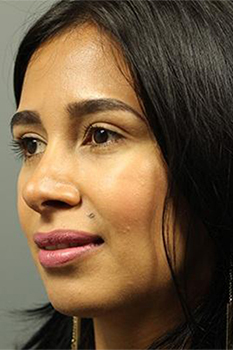
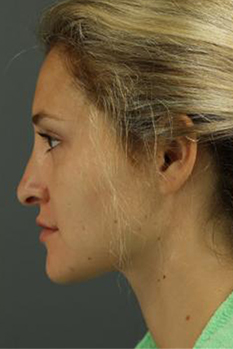
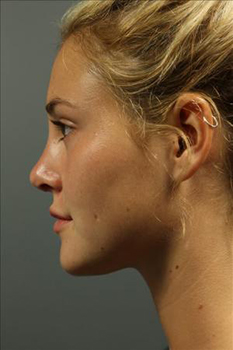
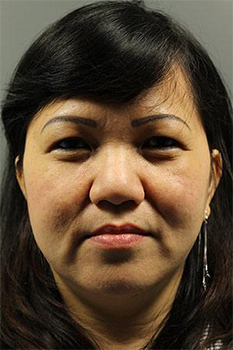

What are the Differences Between Rhinoplasty At Restora Austin Vs. Traditional Rhinoplasty?
Dr. Reid believes that no one’s nasal shape is suitable for every person. The approach must be tailored to each patient’s specific problems, balance their facial features, and consider their desires. That’s why so much time is spent in discussion with each patient. Photographic alterations are carefully reviewed together, and a plan that will deliver the most balanced result is determined. Equally important is Dr. Reid’s unique surgical approach to rhinoplasty.
He refers to his surgical approach as Structural Rhinoplasty. As opposed to the older techniques of reductive rhinoplasty, which removed large portions of the skeleton of the nose, this technique respects the importance of each structure of the nose. Judicious removal of tissue is performed, but the careful reshaping of structures with suturing techniques is preferred. This preserves the tissue and cartilages of the nose so that both aesthetics and function are left intact. Typically, Dr. Reid takes advantage of the open technique. In this approach, an incision is made along the under-surface of the nose that separates the nostrils. Through this incision and additional tiny incisions on the inside of the nose, Dr. Reid can directly visualize the skeletal structures of the nose and make the precise changes required for predictable and natural results. This scar is hidden and all but disappears with time.
How Much Does Rhinoplasty Cost in Austin, TX?
The cost of a nose job varies significantly from patient to patient. If you’re interested in the price for a rhinoplasty, the best way to get an idea of the cost is to schedule a virtual consultation.
How to Choose the Best Rhinoplasty Surgeon in Austin?
When considering your surgeon for rhinoplasty in Austin, you should only consider qualified plastic surgeons. Dustin L. Reid, MD, FACS, is a double board-certified plastic surgeon dedicated to exceptional surgical skills and ethical standards.
He has a superior educational and training foundation. He is a self-motivated, progressive thinker committed to natural-looking enhancements, cutting-edge technology, and patient satisfaction. Dr. Reid combines classic plastic surgery training with outstanding surgical skills. He often utilizes non-surgical treatments to optimize your outcome and limit your recovery time. His reputation and that of Restora Austin are based on individualized treatment plans and natural surgical results. It’s you, only better.
Are you ready for your better-looking nose? Call Restora Austin today at 512.371.8817.
Can rhinoplasty be combined with other facial procedures?
A rhinoplasty at Restora Austin is often combined with other facial procedures to create balanced, harmonious results and reduce overall recovery time. Because the nose sits at the center of the face, enhancing surrounding features at the same time can improve facial proportions and help patients achieve a more complete transformation.
Common procedures combined with rhinoplasty include:
Why Choose Restora Austin for Your Rhinoplasty?
Choosing the right surgeon is arguably the most important decision you’ll make when considering rhinoplasty, and Restora Austin stands out for its precision, artistry, and patient-centered approach. Our board-certified plastic surgeons combine advanced surgical training with a deep understanding of facial aesthetics to create results that look natural, balanced, and uniquely tailored to each patient’s features. With thousands of successful rhinoplasty procedures performed, Restora Austin is known for delivering outcomes that enhance patients’ appearance and breathing function while maintaining results that never look over-operated on or unnatural.
At Restora Austin, every rhinoplasty begins with a meticulous, personalized evaluation, including 3D imaging, detailed airway assessment, and a collaborative discussion about your goals. Our surgeons specialize in both cosmetic and functional rhinoplasty, revision rhinoplasty, and complex nasal reconstruction, giving Austin patients access to a level of expertise rarely found outside major academic centers. From your initial consultation to your final follow-up, you’ll experience the unmatched safety, skill, and support that define the Restora Austin standard.
What Can You Expect During Rhinoplasty Recovery?
Rhinoplasty recovery is a gradual process, but most patients are surprised by how manageable the process feels with proper guidance and preparation. After surgery, you can expect mild swelling, congestion, and pressure, which are all normal signs of healing. A small external splint is typically worn for about a week to protect the nose and support its new shape. Most patients return to work or school within 7 to 10 days, while swelling continues to improve over the following weeks.
During the first few months, the nose refines as internal swelling subsides, and breathing continues to improve. Final results take shape gradually, with the most noticeable changes visible by three months and full definition appearing by 12 to 18 months, especially in the nasal tip area. Your Restora Austin plastic surgeon will provide detailed aftercare instructions, personalized check-ins, and ongoing support to ensure your recovery is as smooth and safe as possible.
How long does it take for rhinoplasty swelling to fully resolve?
Most rhinoplasty swelling improves significantly within the first 3 to 4 weeks, but it can take 12 to 18 months for all swelling to fully go away and reveal the final shape of your nose. Early healing happens quickly, but the deeper tissues need more time, which is why subtle definition continued to improve month after month.
How long do rhinoplasty results last?
Rhinoplasty results are typically permanent because the structural changes made to the bone and cartilage do not revert once fully healed. While the nose will continue to age naturally, the changes made during surgery remain that way for decades.
Rhinoplasty FAQs
Can rhinoplasty improve breathing problems or nasal obstructions?
Yes, a rhinoplasty can improve breathing problems when it includes functional corrections to the internal structures of the nose like the deviated septum, enlarged turbinates, or collapsed nasal valves.
What is the difference between open and closed rhinoplasty?
The difference between open and closed rhinoplasty comes down to incision placement and surgical visibility. In an open rhinoplasty, a small incision is made across the columella, the strip of skin between the nostrils, opening the nasal skin to be lifted for full visibility of the underlying structures. In a closed rhinoplasty, all incisions are made inside the nostrils, leaving no external scar and typically result in less overall swelling and a shorter early recovery, though visibility is more limited.
What age is appropriate for rhinoplasty?
Most patients are ready for rhinoplasty once their nose has finished growing, which typically happens around 17 years or girls and 18 years for boys. The key factor isn’t just age though, it’s about the nasal structures and whether they have reached full maturity, ensuring the ongoing development of the nose isn’t interfered with.
Can rhinoplasty correct a previously broken nose?
Yes, a rhinoplasty can correct a previously broken nose by restoring proper alignment, symmetry, and nasal function. A broken nose can often lead to issues like a crooked bridge, deviated septum, collapsed nasal valves, or persistent breathing problems, and these structural issues can be repaired during surgery.
What is revision rhinoplasty, and when is it necessary?
Revision rhinoplasty is a secondary nose surgery performed to correct concerns that remain after previous rhinoplasty, whether those concerns are cosmetic, functional, or both. Because the nose has already been operated on, revisions are typically more complex and require a surgeon with advanced expertise in nasal anatomy, scar tissue management, and structural reconstruction.
Will rhinoplasty change my voice?
Rhinoplasty rarely changes a person’s voice, but subtle differences can occur, especially in individuals who rely heavily on vocal performance. Because the nose plays a role in resonance, adjustments to internal structures may slightly alter how sound travels through the nasal passages. For most patients, these changes are minimal and not noticeable in everyday speech.
How long should I avoid exercise or sports after rhinoplasty?
Most patients are advised to avoid strenuous exercise and sports for 4 to 6 whole weeks after rhinoplasty to protect the healing process and prevent complications like bleeding or increased swelling. Light walking is usually safe within a few days, but anything that raises your heart rate significantly like running, weightlifting, or high‑intensity workouts should wait until your surgeon clears you. Contact sports require even more caution, often 6 to 8 complete weeks or longer, because the nose is vulnerable to injury while the bones and cartilage are still stabilizing.
Can I wear glasses after rhinoplasty?
You can wear glasses after rhinoplasty, but they should not rest on the bridge of your nose for several weeks while the bones and cartilage are healing. If you need to wear your prescription lenses, options like taping the glasses to your forehead or using lightweight, off‑bridge support can help until your surgeon clears you.
What happens if I have thick nasal skin?
Having thick nasal skin can influence your rhinoplasty results, but it doesn’t necessarily prevent you from achieving your desired outcomes. Thick skin tends to soften definition, especially in the nasal tip, because it doesn’t shrink‑wrap tightly over the underlying cartilage. However, our experienced plastic surgeon at Restora Austin can use specialized techniques to create refinement beneath thicker skin.
Is rhinoplasty painful?
Most patients are surprised to learn that rhinoplasty is not very painful. Instead of sharp pain, people typically describe recovery as feeling like pressure, congestion, or fullness, similar to having a stuffy nose.